Themes
Three palettes, one switch
Curated from lospec — same UI, different soul. Switch at runtime with data-theme.
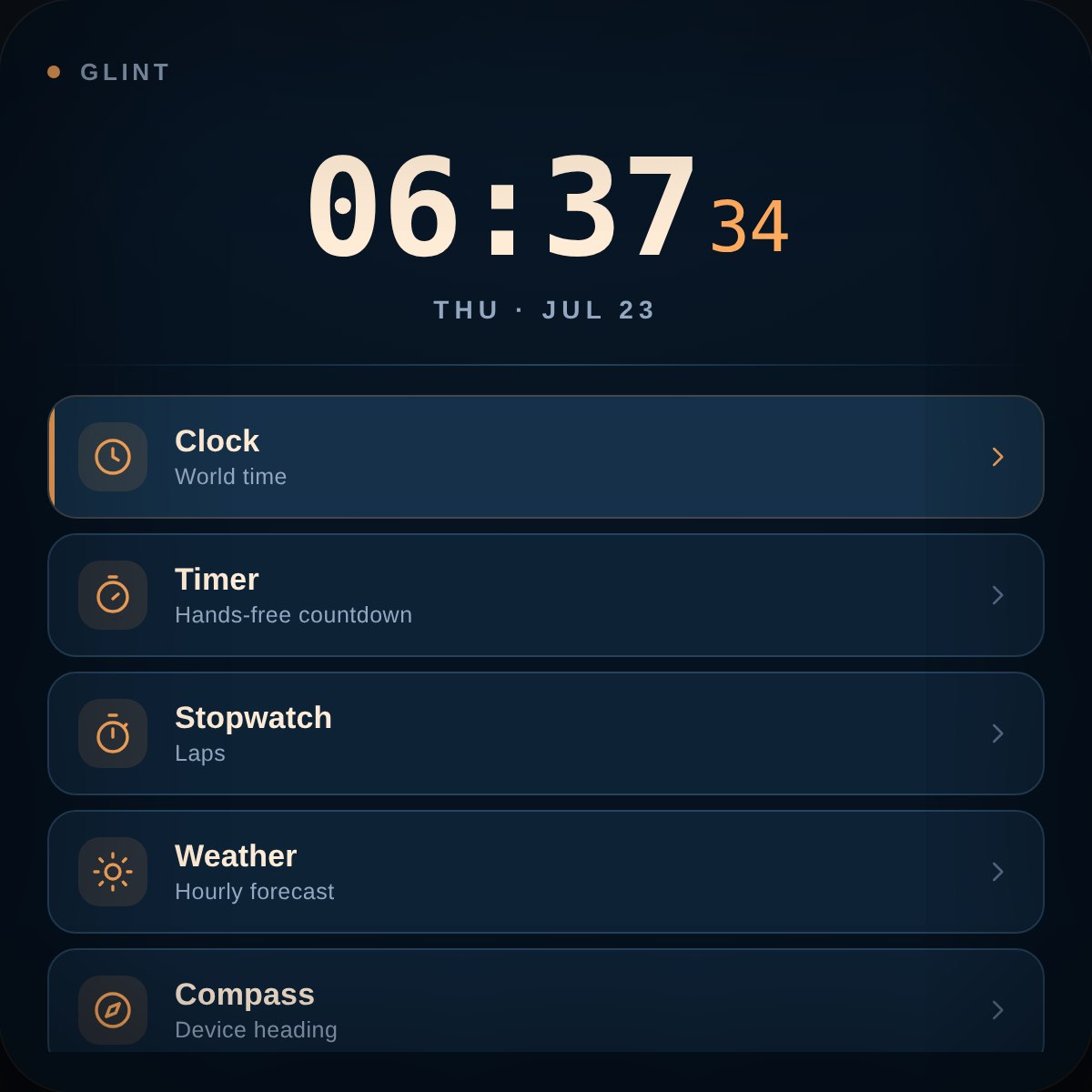 Ember · SLSO8
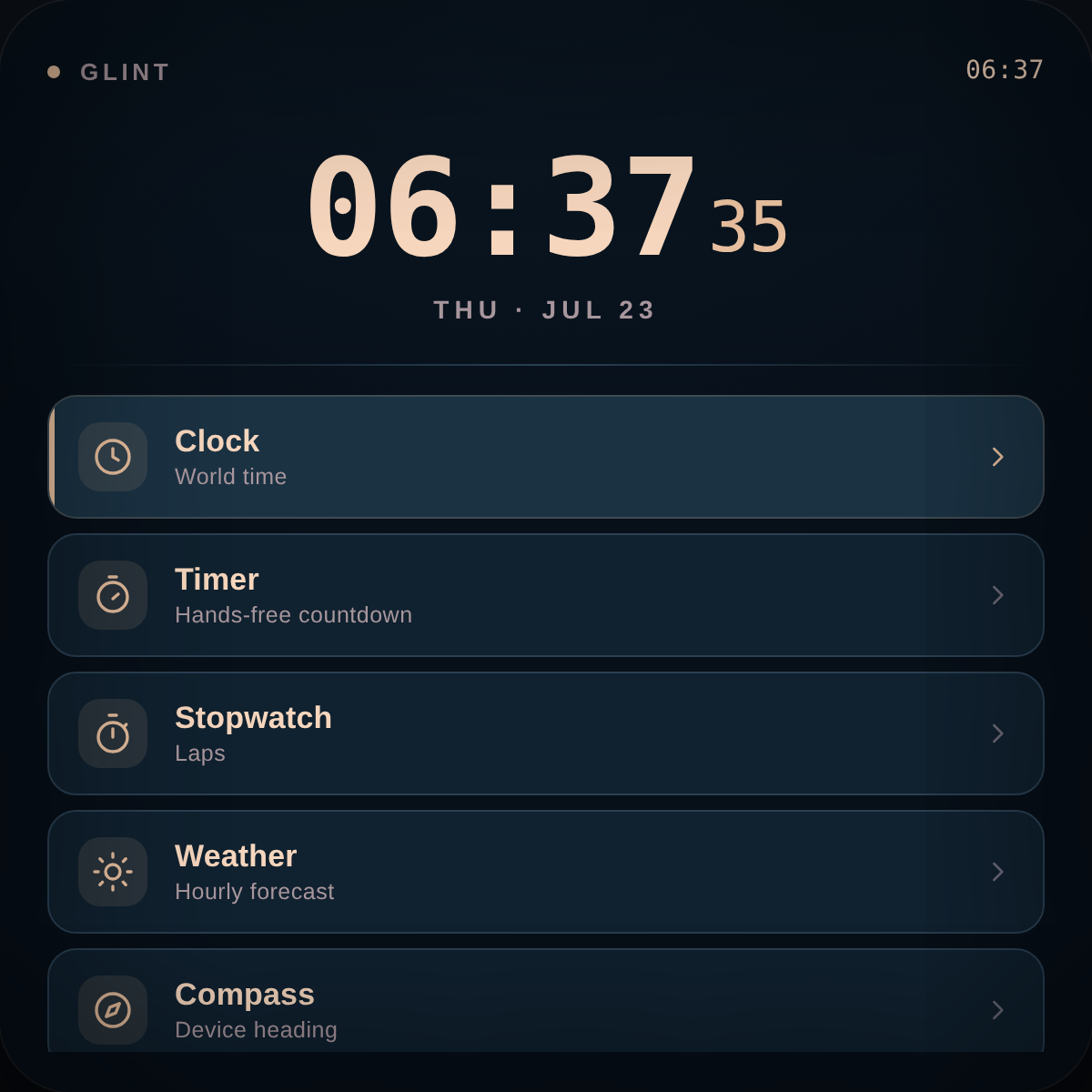 Nyx · Nyx8
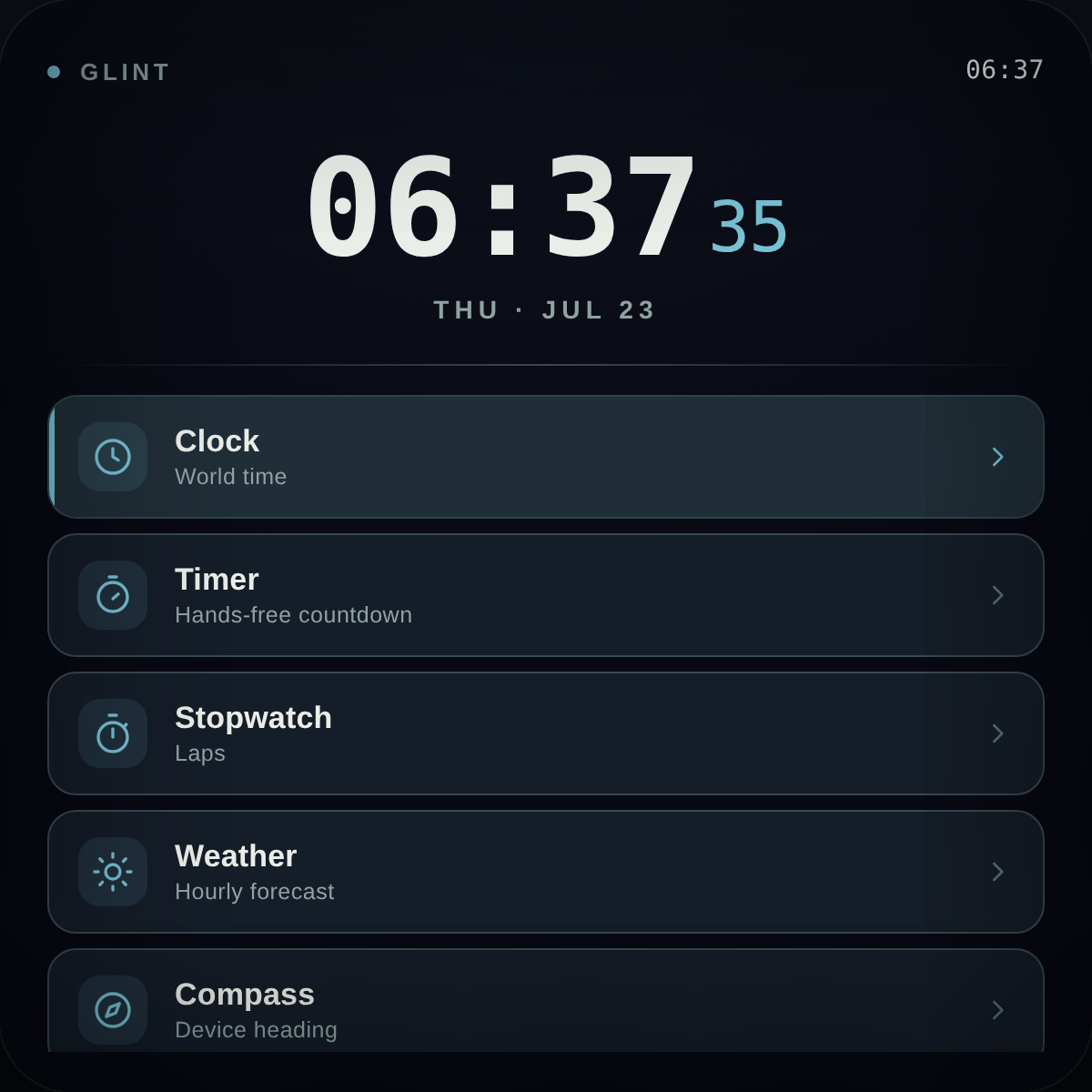 Apollo · Apollo
Build glanceable web apps for Meta Ray-Ban Display — 600×600, Neural Band, curated palettes. No cursor, no build step, zero dependencies.
The display is 600×600, has no cursor, and is driven by a wristband. Glint gives you a launcher-hub: ship one URL that hosts a whole suite of glanceable utilities — and own the home screen before an official store exists.
A fixed 600×600 stage that scales to any viewport — ≈1:1 on the glasses.
No cursor. A focus ring moves with up/down and selects on activate.
Keyboard + touch for dev; real Neural Band / Cap Touch wired in one place.
Many utilities behind a single URL — sidestepping the per-app tester cap.
Ember / Nyx / Apollo as design tokens. Add your own in 8 hex values.
Plain HTML/CSS/JS. No bundler required, plus a one-command single-file build.
Curated from lospec — same UI, different soul. Switch at runtime with data-theme.
Ember · SLSO8Nyx · Nyx8Apollo · ApolloClock, Timer, Stopwatch, Weather, Compass, Level, Notes, Converter, a component gallery, and docs — all built with Glint, ready to fork.
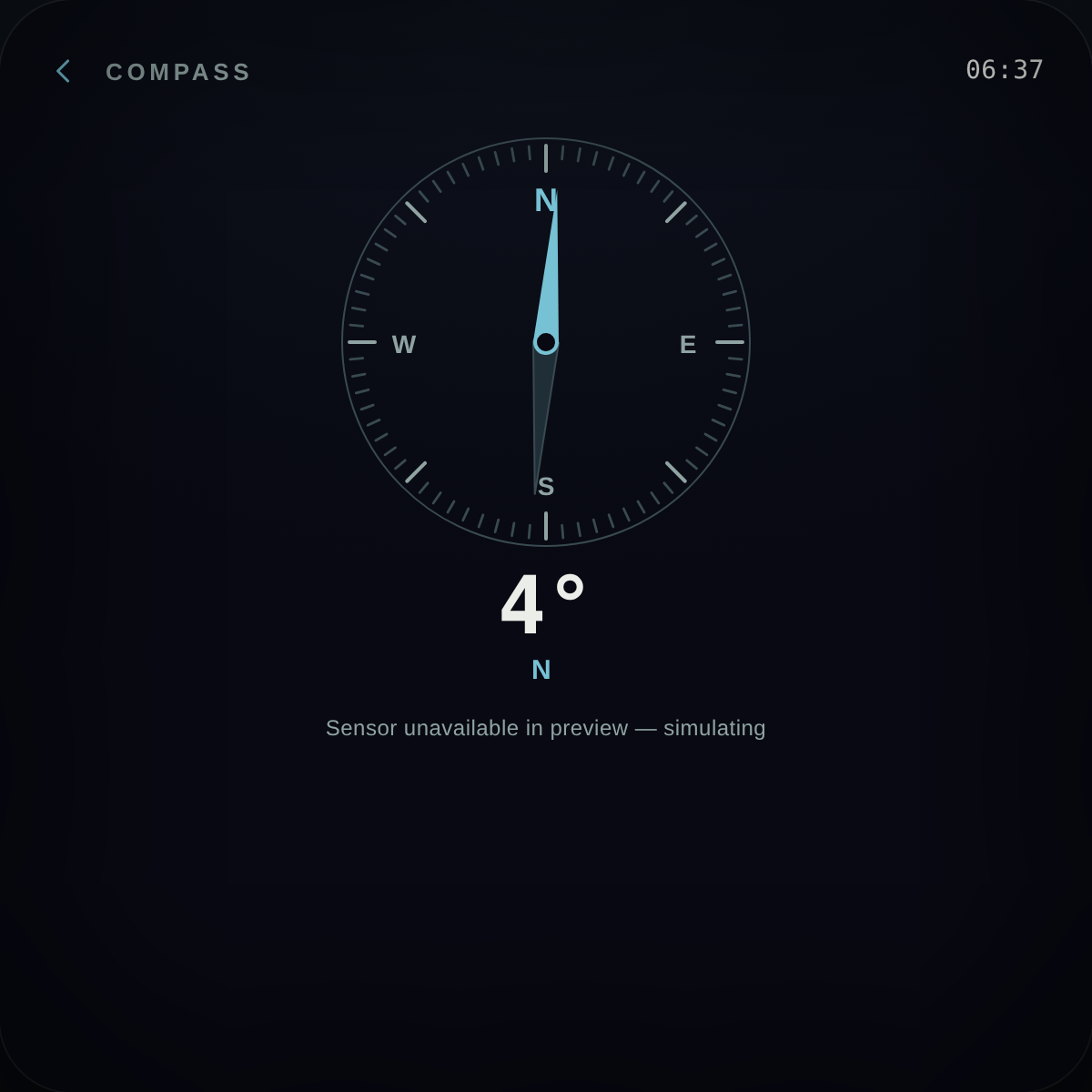 Compass · instrument bezel + sensor
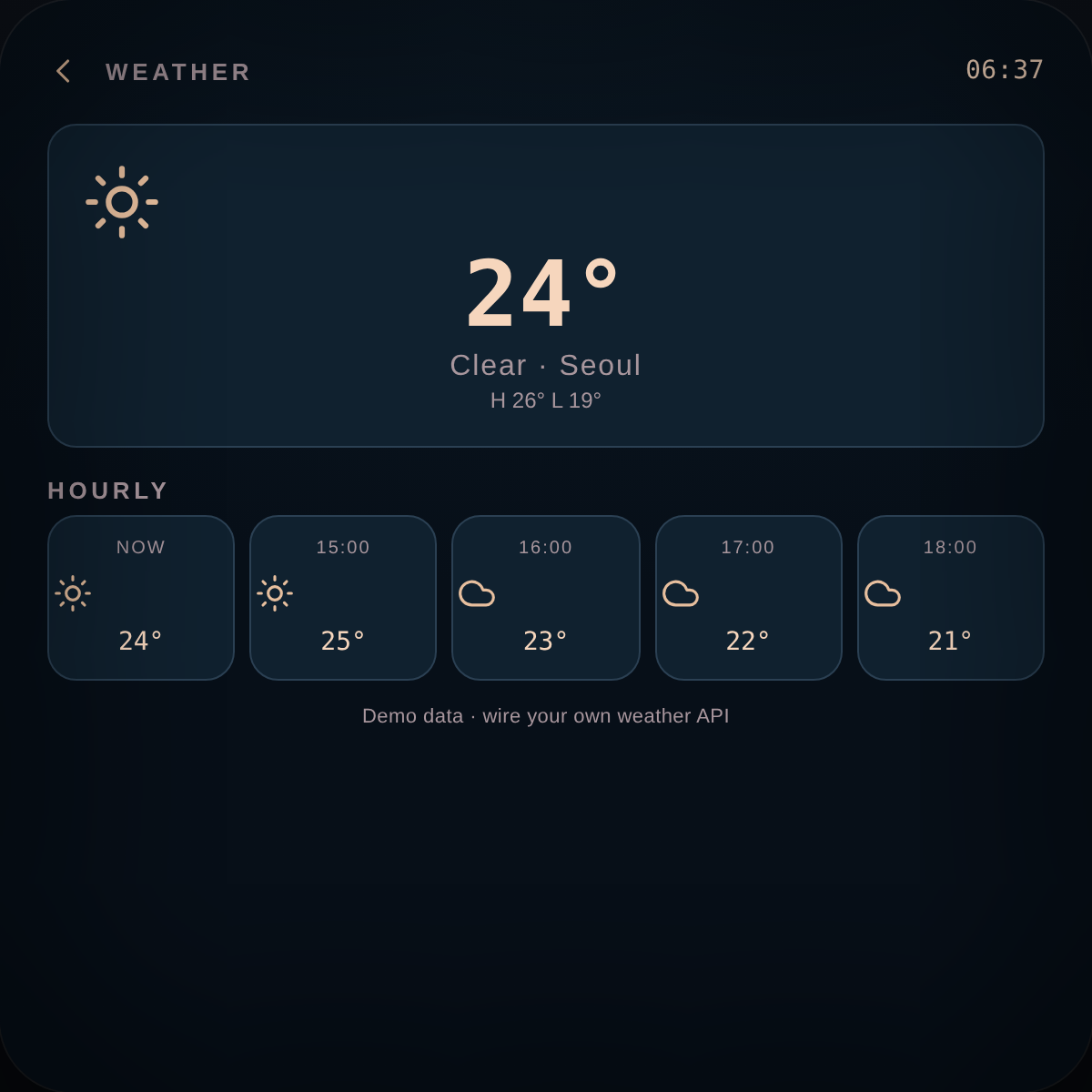 Weather · glanceable cards
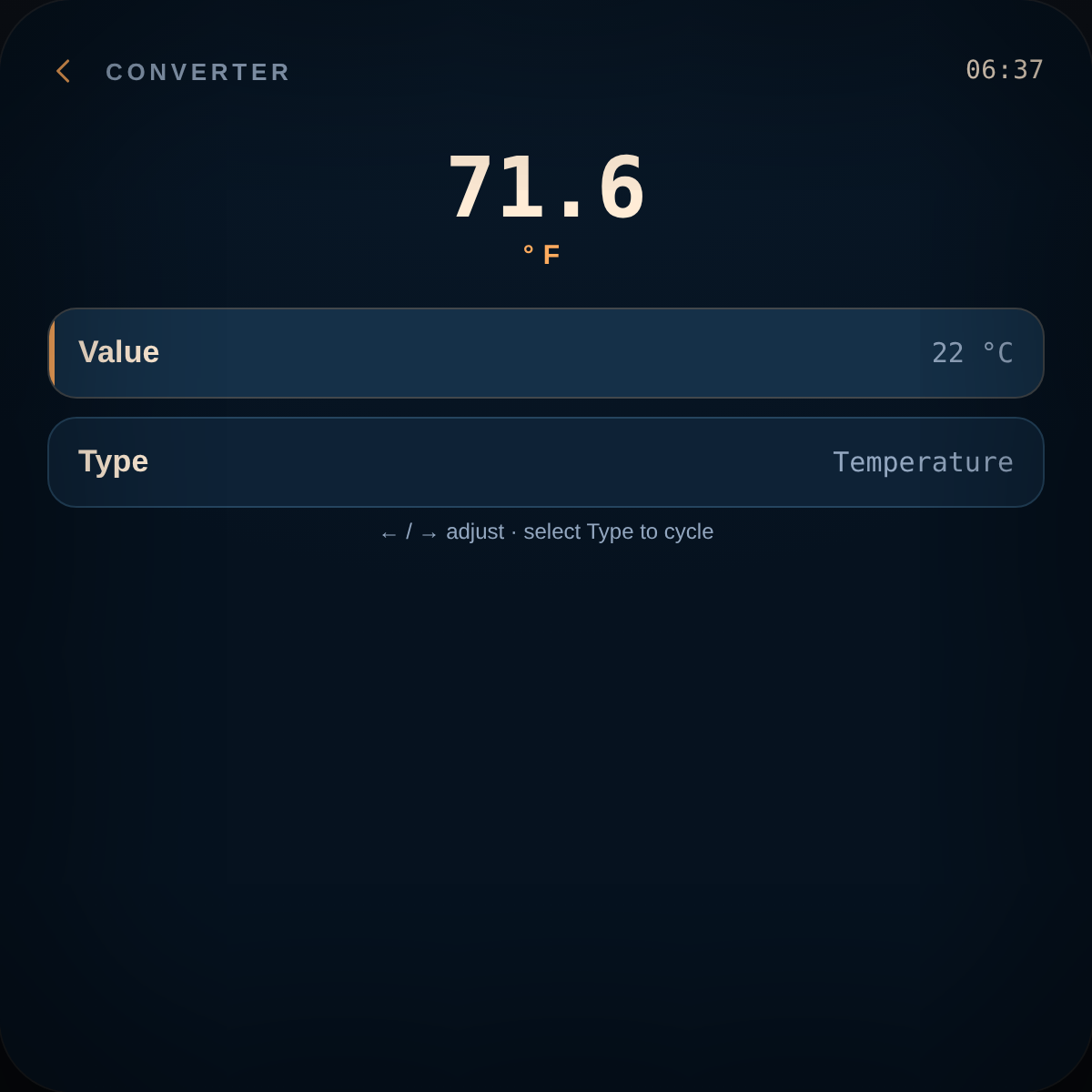 Converter · ← / → steppers
A screen is a function. Register a row in the launcher. That's the whole model.
function HelloApp(){
  return Glint.Screen({ title: 'Hello' },
    Glint.Row('Say hi', {
      icon: Glint.icon('plus'),
      onSelect: () => Glint.toast('Hi from the HUD')
    })
  );
}